How Stress Affects Memory and Focus
| The link | Short bursts of stress can sharpen focus; stress that stays high for weeks does the opposite, blunting memory and concentration. |
| Why | Chronically elevated stress hormones affect the brain regions behind memory and attention, and disrupt the sleep those functions depend on. |
| What helps | Daily movement, breathing, protected sleep, time in nature, boundaries on notifications, and whole-food nutrition. |
The stress-memory connection
Think back to a moment of real pressure — a near-miss in traffic, a deadline down to the wire. In that instant your senses sharpen and your focus narrows. That is stress working as designed: a short surge of adrenaline and cortisol that primes you to act. Understanding how stress affects memory and focus starts with a crucial distinction, though — because the same system that sharpens you for a few minutes quietly dulls you when it never switches off.
Acute, short-lived stress can actually help you encode a vivid memory. Chronic stress — the low-grade, always-on kind that comes from an overloaded life — does the opposite. When stress hormones stay elevated for weeks and months, they affect the brain regions most involved in forming and retrieving memories and in holding attention. The result is a mind that feels foggy, forgetful and scattered, even when nothing is obviously wrong.
How chronic stress shows up as fog and forgetfulness
Chronic stress rarely announces itself as "stress." It shows up disguised as symptoms: you re-read the same paragraph, lose your train of thought mid-sentence, forget why you opened a browser tab, or blank on a familiar name. Because these look like memory or focus problems, it is easy to miss the root cause. In reality, a brain busy scanning for threats has less bandwidth left for calm encoding and retrieval — which is why chronic stress is one of the most common hidden drivers of the everyday forgetfulness so many people ask about.
Why stress hits focus so hard
There are a few overlapping reasons. First, the stress response is built to narrow attention onto a perceived threat, which is unhelpful when the "threat" is a full inbox and you need broad, flexible thinking. Second, worry consumes working memory — the small mental scratchpad you use to hold information in mind — leaving less room for the task in front of you. Third, and often most important, stress wrecks sleep, and sleep is when memories are consolidated. Lose the sleep and you lose the filing system. Finally, sustained stress affects blood pressure and circulation, and the thinking brain is exquisitely sensitive to its blood supply.
There is also a vicious-cycle problem worth naming. When stress makes you forgetful and unfocused, you fall behind, which creates more pressure, which raises stress further — and round it goes. Recognising that loop is oddly reassuring, because it means the fog is a product of the cycle rather than a permanent change in your mind. Break any link in the chain — a better night's sleep, a walk that clears your head, one task finished cleanly — and the whole loop tends to loosen. That is why small, repeatable habits so often outperform a single dramatic effort to "sort everything out at once."

How to tell if stress is behind your fog
Because stress hides behind other symptoms, it helps to look for the pattern rather than the label. Ask yourself a few honest questions. Does your focus fall apart on your busiest days and recover on quiet ones? Do you lie awake replaying conversations, then feel foggy the next morning? Have the lapses crept in alongside a new job, a house move, caring responsibilities or money worries? Do you feel physically wound up — a tight jaw, shallow breathing, a racing mind at rest? If several of those ring true, stress is a likely driver, and the good news is that the levers below tend to help quickly, because you are treating the cause rather than chasing the symptom.
Daily habits to calm a busy mind
You cannot eliminate stress, and you would not want to — some is useful. The goal is to keep it from becoming chronic, using small habits you can actually repeat.
Move your body daily. Physical activity is one of the most effective stress regulators there is. A brisk walk, a bike ride or a short workout burns off stress chemistry and boosts blood flow to the brain at the same time.
Breathe slowly, on purpose. A few minutes of slow breathing — longer out-breaths than in-breaths — nudges your nervous system out of fight-or-flight. It is free, portable, and works within minutes.
Protect your sleep fiercely. Stress and poor sleep feed each other. Break the loop with a consistent bedtime, a wind-down routine and screens off in the last hour. Better sleep is often the single biggest lever on a stressed, forgetful mind.
Get outside. Time in nature, even a short walk in a park, measurably lowers stress and restores depleted attention. Daylight also helps anchor the sleep-wake rhythm.
Put boundaries on inputs. Constant notifications and doom-scrolling keep the stress response simmering. Batch your messages, mute non-essential alerts, and give the news a defined window rather than an open tap.
Stay connected. Conversation and connection are among the most reliable buffers against chronic stress. A phone call to a friend is a legitimate brain-health habit.

Eat and supplement to support a stressed brain
Nutrition builds resilience. Whole foods, magnesium-rich leafy greens and nuts, steady blood sugar and good hydration all help the brain weather pressure — the same principles we lay out in our guide to how hydration affects focus and mental energy. Try to avoid leaning on caffeine and sugar to power through, since both can amplify the jittery, crash-prone side of stress; keep caffeine to the earlier part of the day so it does not steal your sleep.
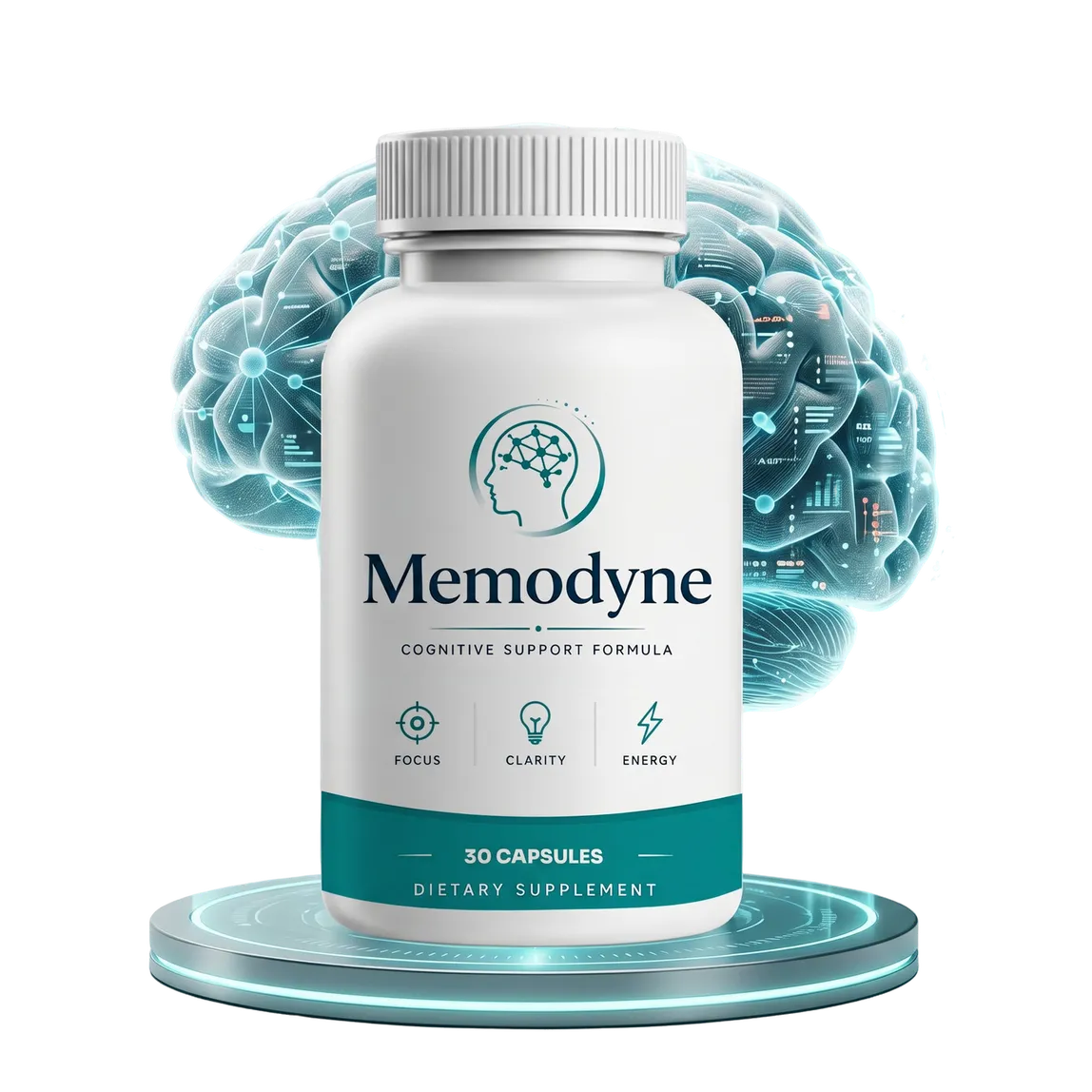
Because a stressed brain is so dependent on steady circulation, supporting healthy blood flow is a sensible piece of the picture. Memodyne pairs L-arginine and L-arginine alpha-ketoglutarate with L-citrulline — amino acids the body uses to make nitric oxide, which helps blood vessels relax — alongside niacin for normal energy metabolism and beta-alanine for everyday stamina, all in one daily capsule. It is support for your habits, not a substitute for managing stress at the source. If you would like to build it into your routine, see the current Memodyne packages here.
When to reach out for help
Everyday stress responds well to everyday habits, but persistent, overwhelming stress or anxiety is worth taking to a professional. If stress is affecting your sleep, mood, relationships or ability to function for weeks at a time, talk to your doctor or a mental-health professional. Supporting your brain through lifestyle and getting help when you need it are not opposites — they are both signs of taking your mind seriously.

Support a calmer, clearer mind
Memodyne delivers six cognitive and circulatory actives in one easy daily capsule — backed by a 60-day guarantee.
See Memodyne PackagesFrequently asked questions
How does stress affect memory and focus?
In short bursts, stress hormones like adrenaline and cortisol can sharpen attention. The problem is chronic stress: when cortisol stays elevated for weeks, it affects the brain regions involved in forming and retrieving memories and in sustaining attention, and it disrupts sleep — so memory and focus both suffer.
Can stress cause brain fog?
Yes. Many people experience chronic stress as exactly the cloudy, scattered, forgetful feeling we call brain fog. A mind spending its resources on vigilance has less left for clear thinking. Calming the stress response is often the fastest way to lift that fog.
Does stress-related memory loss go away?
Everyday memory and focus problems driven by stress typically improve as the stress eases and sleep recovers — they are usually a function of an overloaded system rather than permanent change. Consistent stress-management habits, given a few weeks, tend to restore steadier recall.
What are the best daily habits to reduce stress?
The best habits are the ones you will actually repeat: daily movement, a few minutes of slow breathing, protected and consistent sleep, time outdoors, limits on notifications and news, and staying connected to people. Small, regular actions beat occasional grand gestures.
Can nutrition or a supplement help a stressed brain?
Nutrition supports resilience: whole foods, magnesium-rich greens and nuts, steady blood sugar and good hydration all help. A supplement such as Memodyne is designed to support healthy blood flow to the brain with amino-acid precursors to nitric oxide, alongside niacin and beta-alanine — support for your habits, not a replacement for managing stress itself.
References
- American Psychological Association (APA) — resources on chronic stress and its effects on the body and brain.
- Harvard Health Publishing — articles on cortisol, the stress response and cognition.
- National Institute of Mental Health (NIMH) — consumer information on managing stress.
- Sleep Foundation — research on stress, sleep and memory.
- American Physiological Society — research on stress, blood pressure and cerebral blood flow.
The Memodyne Research Team is a small group of writers and reviewers focused on everyday cognitive health — memory, focus, stress resilience, healthy circulation and the daily habits that support them. We read the primary research, translate it into plain language, and fact-check every guide before it is published. Our articles are general education and are not a substitute for professional medical or mental-health care.
† These statements have not been evaluated by the FDA. This product is not intended to diagnose, treat, cure or prevent any disease. This article is for general information only and is not medical advice.