Best Foods for Memory and Concentration
| The idea | Your brain runs on steady fuel, healthy blood flow and specific nutrients — food is the first place to supply all three. |
| Top brain foods | Oily fish, leafy greens, berries, nuts and seeds, beets, whole grains, eggs and a little dark chocolate. |
| The pattern | A Mediterranean-style, mostly-whole-food plate beats any single 'superfood' — and steady blood sugar keeps focus even. |

Can food really affect memory and concentration?
It is one of the most common questions we hear, and the honest answer is yes — with a caveat. No single bite will hand you a photographic memory, but the pattern of what you eat, day after day, shapes the three things your brain depends on most: a steady supply of fuel, healthy blood flow, and the specific nutrients neurons and blood vessels are built from. That is why choosing the best foods for memory and concentration is less about chasing one miracle ingredient and more about stocking your plate with the right cast of characters.
Your brain is astonishingly demanding. It makes up around 2% of your body weight but consumes roughly 20% of your daily energy and oxygen. Feed it erratically — a sugary breakfast, a skipped lunch, a mid-afternoon vending-machine fix — and you will feel it as jitter, crash and fog. Feed it steadily, and focus becomes far easier to hold.
The best foods for memory and concentration
Here are the everyday foods with the strongest support behind them. Aim to work several into your week rather than obsessing over any one.
Oily fish
Salmon, sardines, mackerel and trout are rich in omega-3 fats, especially DHA, a building block of brain-cell membranes. Diets higher in oily fish are consistently linked with better cognitive outcomes. Two servings a week is a common, realistic target.
Leafy green vegetables
Spinach, kale, rocket and other greens deliver folate, vitamin K, lutein and dietary nitrates. Large studies associate a daily serving of leafy greens with slower age-related cognitive decline — one of the simplest, cheapest upgrades you can make.
Berries
Blueberries, strawberries and blackberries are loaded with flavonoids called anthocyanins, the pigments that give them their deep colour. These compounds are studied for their role in supporting memory and protecting brain cells from everyday oxidative stress.
Nuts and seeds
Walnuts, almonds, pumpkin seeds and flaxseed supply vitamin E, healthy fats, magnesium and, in the case of walnuts and flax, plant omega-3s. A small daily handful is an easy, satisfying way to steady both appetite and focus.
Beets and nitrate-rich vegetables
Beets, along with leafy greens, are high in natural nitrates that the body converts into nitric oxide — the molecule that helps blood vessels relax and widen. Better blood flow means more oxygen and fuel reaching the thinking brain.
Whole grains and legumes
Oats, brown rice, quinoa, lentils and beans release glucose slowly, avoiding the spike-and-crash that ultra-refined carbs cause. Steady blood sugar is one of the most underrated foundations of steady concentration.
Eggs
Eggs are a convenient source of choline, a nutrient the body uses to make acetylcholine, a neurotransmitter involved in memory and learning. They also deliver quality protein to keep you full and even.
A little dark chocolate, coffee and green tea
Cocoa flavanols, and the caffeine-plus-L-theanine combination in green tea, are studied for short-term boosts to alertness and mood. Keep portions modest — the goal is a lift, not a jitter-and-crash cycle.
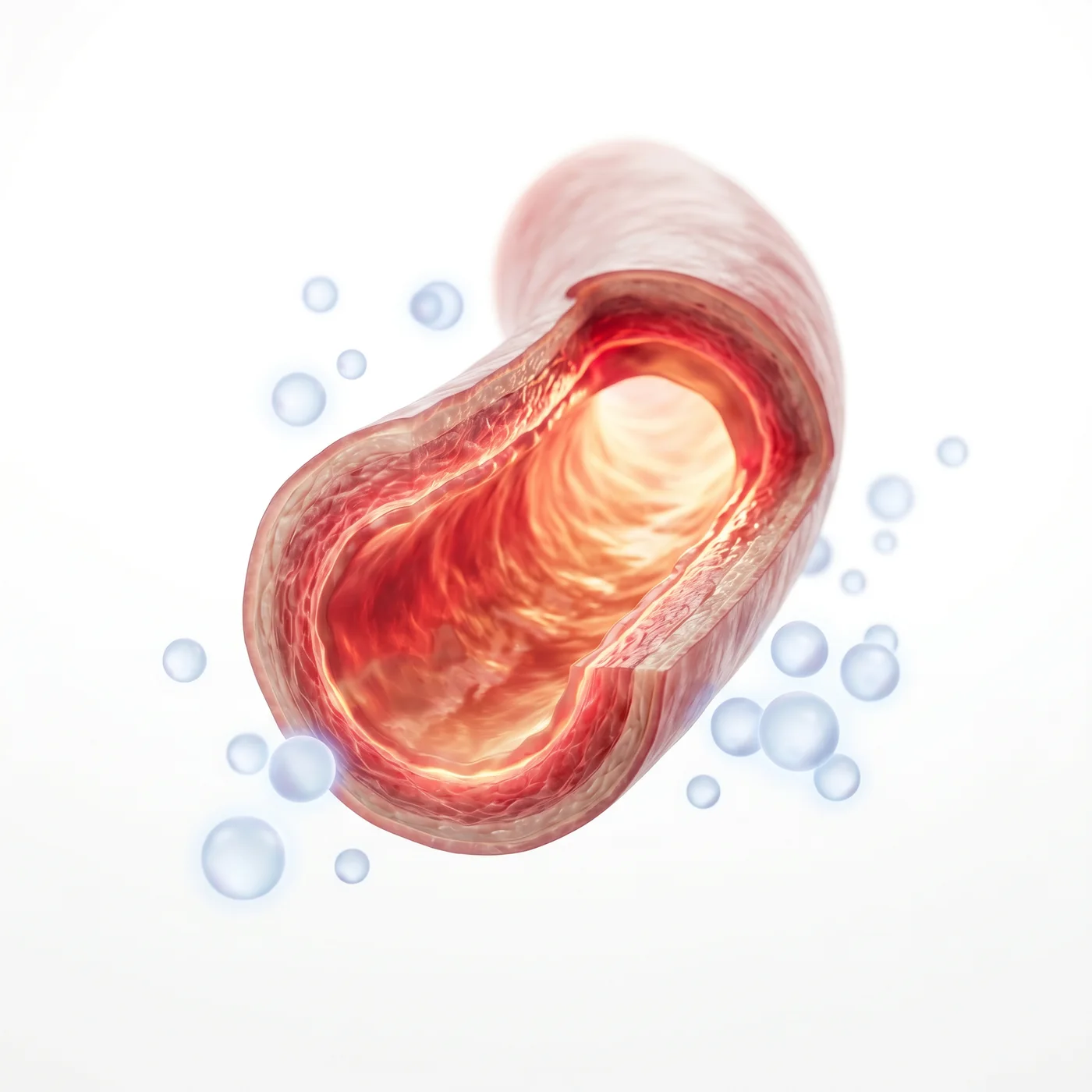
One food deserves a special mention for the blood-flow angle: watermelon. It is a natural source of L-citrulline, an amino acid the body recycles into L-arginine to help make nitric oxide. It is the same nutrient story that runs through much of what supports healthy circulation — and it links diet directly to the mental-clarity benefits we explore in what causes brain fog and how to clear it naturally.
Eating patterns that support the brain
Nutrition scientists increasingly talk about patterns rather than individual foods, and two stand out. The Mediterranean diet — heavy on vegetables, fruit, whole grains, olive oil, beans and fish, light on red and processed meat — is repeatedly linked with better cardiovascular and cognitive health. The MIND diet blends the Mediterranean pattern with the blood-pressure-friendly DASH approach and specifically emphasises greens and berries.
You do not need to follow either to the letter. The shared principle is simple: build most meals from whole plants, add healthy fats and quality protein, and keep ultra-processed food occasional rather than routine. Keeping your blood sugar even across the day — by pairing carbs with protein, fat and fibre — does as much for afternoon focus as any single superfood.
Foods and habits worth limiting
Just as important as what you add is what you dial back. Constant added sugar and refined carbohydrates drive the spike-and-crash cycle many people feel as an afternoon fog. Ultra-processed foods tend to be low in the very nutrients the brain needs. And while a little alcohol is a personal choice, excess is clearly unhelpful for both sleep and memory. Hydration belongs here too — being even mildly under-hydrated dulls concentration, as our guide to how hydration affects focus and mental energy explains.
A simple brain-friendly day on a plate
Turning this list into habit is easier with a template. A brain-friendly day might start with oats topped with berries and a spoon of nuts — slow-release carbs, flavonoids and healthy fats in one bowl. Lunch could be a big leafy salad with beans, olive oil and a portion of oily fish or eggs, which keeps blood sugar even through the afternoon dip. An afternoon snack of a small handful of walnuts and a piece of fruit beats the vending machine, and dinner built around vegetables, a whole grain and a lean protein rounds things out. Notice that none of this is exotic or expensive; the power is in the pattern repeated across ordinary days, not in any single "superfood" moment.
Consistency also matters more than intensity. Eating one perfect meal and then three rushed, sugary ones nets out poorly. If you only change one thing this week, make it a daily serving of leafy greens or berries — a small, repeatable win is worth more than an ambitious plan you abandon by Friday.
Where a targeted supplement fits
Food comes first — always. But even a genuinely good diet can fall short of specific building blocks, particularly the amino acids the body uses to make nitric oxide for healthy blood flow. That is the gap a focused formula is designed to help close. Memodyne pairs L-arginine and L-arginine alpha-ketoglutarate with L-citrulline (the same amino acid in watermelon), plus niacin for normal energy metabolism, beta-alanine and a little calcium — in one capsule a day, so it is easy to stay consistent. If you would like to see the options, browse the current Memodyne packages here. For the bigger picture on daily routines, our post on supporting memory and focus naturally after 40 ties the habits together.

Fill the gaps your plate can leave
Even a good diet falls short of some brain-supporting nutrients. Memodyne delivers six actives in one daily capsule, backed by a 60-day guarantee.
See Memodyne PackagesFrequently asked questions
What are the best foods for memory and concentration?
The strongest everyday choices are oily fish (for omega-3 DHA), leafy greens, berries, nuts and seeds, beets and other nitrate-rich vegetables, whole grains, beans and eggs. No single food is magic; the benefit comes from eating this kind of pattern most days.
Do 'brain foods' really work, or is it hype?
Individual foods are not miracle pills, but eating patterns clearly matter. Diets rich in vegetables, fish, whole grains and healthy fats — such as the Mediterranean and MIND patterns — are consistently associated with better cognitive outcomes in large studies. The effect is real but gradual, built over months and years of ordinary meals.
What foods are bad for memory and focus?
The main culprits are ultra-processed foods, added sugar and refined carbohydrates that spike and crash blood sugar, plus excess alcohol. You do not have to be perfect; simply shifting the balance toward whole foods and away from constant sugar makes a noticeable difference to steady focus.
How soon will a better diet improve my concentration?
Some effects are quick: a balanced meal instead of a sugary one can smooth out the afternoon slump the same day. The larger benefits to memory build slowly, so give a better eating pattern several weeks to a few months and judge the trend, not a single day.
Can a supplement replace a healthy diet?
No — and it is not meant to. A supplement like Memodyne is designed to help fill specific gaps a modern diet can leave, particularly the amino acids the body uses to make nitric oxide for healthy blood flow. Think food first, then a daily capsule for consistency.
References
- Harvard T.H. Chan School of Public Health — The Nutrition Source, on diet patterns and brain health.
- Rush University / MIND diet research — studies on dietary patterns and cognitive aging.
- National Institute on Aging (NIH) — guidance on food, nutrients and healthy brain aging.
- American Heart Association — resources on the Mediterranean eating pattern and vascular health.
- Nutrients (journal) — reviews on omega-3 fatty acids, flavonoids and cognition.
The Memodyne Research Team is a small group of writers and reviewers focused on everyday cognitive health — memory, focus, nutrition and the daily habits that support them. We read the primary research, translate it into plain language, and fact-check every guide before it is published. Our articles are general education, not a substitute for advice from your own doctor or a registered dietitian.
† These statements have not been evaluated by the FDA. This product is not intended to diagnose, treat, cure or prevent any disease. This article is for general information only and is not medical advice.