What Causes Brain Fog and How to Clear It Naturally
| What it is | Brain fog is a cluster of symptoms — cloudy thinking, slow recall, poor focus and mental fatigue — not a medical diagnosis on its own. |
| Common causes | Poor sleep, chronic stress, dehydration, blood-sugar swings, a sedentary day, nutrient gaps and constant screen-switching. |
| How to clear it | Fix the basics first: hydrate, sleep, move daily, eat whole foods, single-task, and support healthy blood flow to the brain. |
What brain fog actually feels like
You sit down to work and the words will not line up. You read the same sentence three times. A name you know perfectly well hovers just out of reach. By mid-afternoon your head feels wrapped in cotton wool, and even simple decisions feel like wading through mud. If any of that sounds familiar, you are experiencing what most people call brain fog — and understanding what causes brain fog is the first step to clearing it naturally.
The most important thing to know up front is that brain fog is not a disease. It is a plain-language description of a cluster of symptoms: cloudy or slow thinking, weak short-term recall, trouble concentrating, and a heavy sense of mental fatigue. Because it is a symptom rather than a diagnosis, it almost always has an identifiable, everyday cause — and that is genuinely good news, because everyday causes respond to everyday changes.

What causes brain fog?
Brain fog rarely comes from a single source. More often, a handful of ordinary pressures stack up at the same time until your mental bandwidth quietly runs low. Here are the usual suspects.
1. Poor or broken sleep
Sleep is when the brain files away the day and clears metabolic waste. Even one short night blunts attention and recall the next day, and a run of them compounds fast. If your fog is worst in the morning or hangs around all day, disrupted sleep is one of the first places to look.
2. Chronic stress and mental overload
A brain under constant low-grade stress spends its resources on vigilance rather than clear thinking. Stress hormones, when they stay elevated for weeks, are strongly linked to the foggy, forgetful, scattered feeling many people describe. We cover this in depth in our guide to how stress affects memory and focus.
3. Dehydration and skipped meals
The brain is about three-quarters water and one of the most energy-hungry organs you have. Turn up under-hydrated or running on an empty tank, and mental sharpness is one of the first things to slip. Blood-sugar swings from sugary, ultra-processed meals produce the same effect — a spike, then the classic afternoon crash and fog.
4. A sedentary day and sluggish circulation
Your brain is only about 2% of your body weight, yet it uses roughly 20% of the oxygen and fuel your blood carries. When you sit still for hours, circulation slows, and the thinking brain is often the first place you feel it. Movement is one of the most reliable ways to lift the fog.
5. Nutrient gaps in a modern diet
Fast, convenient eating can leave real gaps — in omega-3 fats, B vitamins, magnesium and the amino acids the body uses to keep blood vessels healthy. Over time, those gaps show up as reduced mental clarity.
6. Constant screen-switching
Jumping between tabs, messages and notifications every few seconds is not multitasking; it is rapid task-switching, and it drains attention and leaves a residue of mental fatigue. Much of what feels like fog is really an overstimulated, never-rested attention system.

How to clear brain fog naturally
Because brain fog is driven by everyday causes, the most powerful fixes are everyday habits. None of these is dramatic on its own; together, they change how your mind feels day to day.
Hydrate first. Start the morning with a tall glass of water before coffee, and keep a bottle within reach. Thirst lags behind actual need, so do not wait until you feel parched. Our full guide to how hydration affects focus and mental energy explains why this one habit does so much.
Protect your sleep. Keep a consistent bedtime, dim screens in the last hour, and treat sleep like the productivity tool it actually is. Memory is consolidated overnight, so the quality of your thinking tomorrow is partly decided tonight.
Move every day. A brisk 20–30 minute walk raises your heart rate and encourages blood flow to the brain. You do not need a gym — a walk at lunch or a bike ride most days is plenty to keep the fog at bay.
Eat for steady energy. Trade the sugar-and-refined-carb cycle for meals built on vegetables, oily fish, berries, nuts, beans and whole grains. Steady blood sugar means steadier focus, and these foods also feed the blood vessels the brain depends on.
Single-task on purpose. Work in focused blocks, silence non-essential notifications, and give your attention genuine breaks. Even a few minutes of looking out a window or stepping outside resets a tired mind.
The circulation connection — and where a supplement fits
Because the brain is so blood-hungry, healthy circulation sits underneath almost every fog-clearing habit above. Blood vessels are lined with an active layer called the endothelium that widens and narrows using a small molecule called nitric oxide. When nitric oxide is plentiful, vessels relax and blood — with the oxygen and glucose your neurons crave — flows more freely.
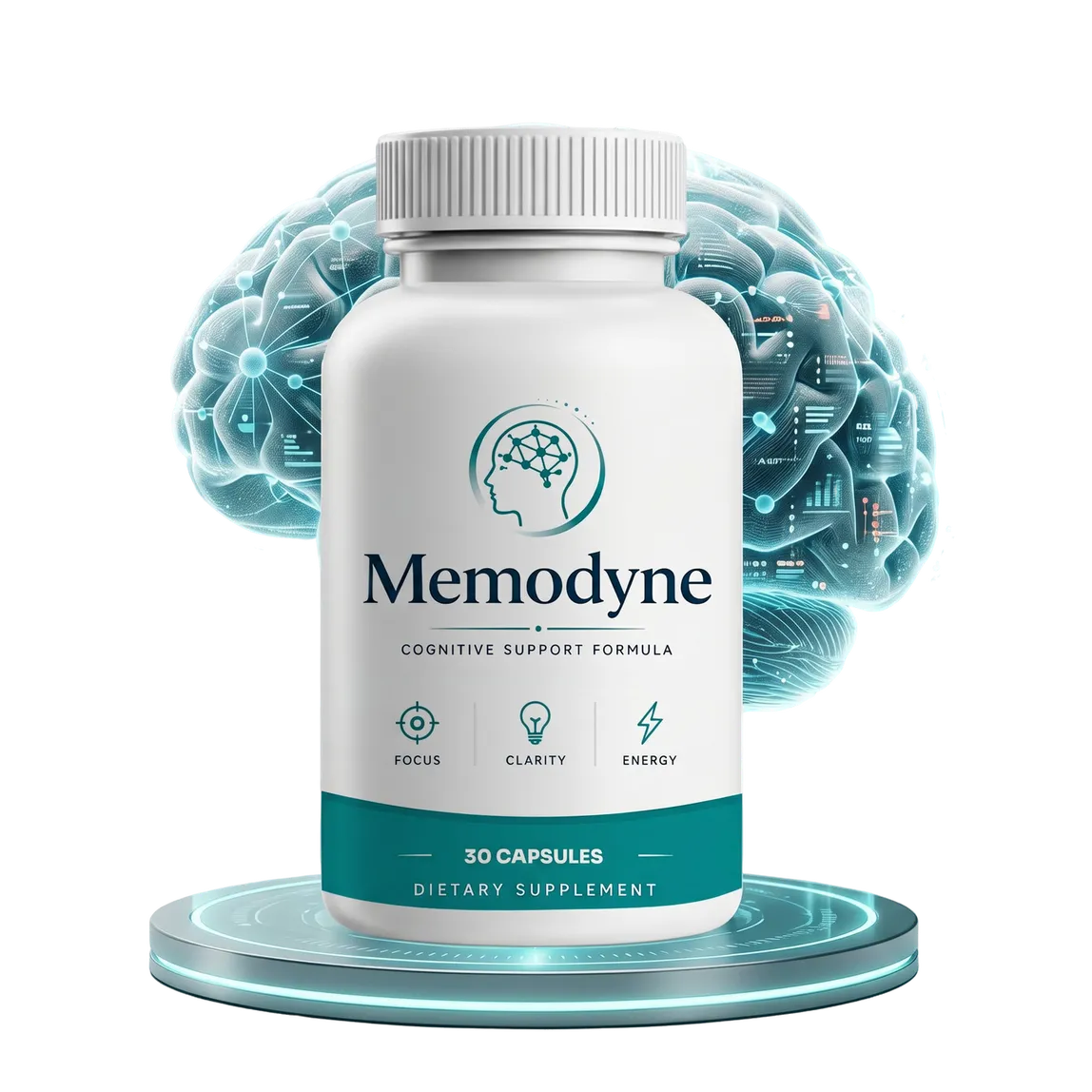
Your body makes nitric oxide from the amino acid L-arginine and recycles L-citrulline back into arginine to keep the supply topped up. That is exactly why these nutrients appear in circulation-focused formulas. Even with good habits, modern diets often fall short of these specific building blocks — which is the gap a focused formula is designed to help fill. A supplement such as Memodyne pairs L-arginine and L-arginine alpha-ketoglutarate with L-citrulline, alongside niacin for normal energy metabolism, beta-alanine for everyday stamina and a little calcium involved in nerve signalling, all in one daily capsule. If you want the deeper background, our guide on how to support memory and focus naturally after 40 walks through the blood-flow-first approach in detail. Ready to make it a routine? See the current Memodyne packages here.
When brain fog deserves a professional's attention
Most everyday fog lifts once you tend to sleep, stress, hydration, food and movement. But fog is occasionally a signal of something that needs medical input — a thyroid issue, a nutrient deficiency, a medication side effect, or another underlying condition. If your brain fog comes on suddenly, is severe, keeps getting worse, or does not improve after a few weeks of genuinely better habits, talk to your doctor. Clearing brain fog naturally and knowing when to get checked are not opposites; they are two halves of taking your mind seriously.

Support a clearer, sharper mind
Memodyne puts six cognitive and circulatory actives into one easy daily capsule — backed by a 60-day guarantee.
See Memodyne PackagesFrequently asked questions
Is brain fog a medical condition?
Brain fog is a description of how you feel, not a diagnosis in itself. It describes cloudy thinking, forgetfulness and trouble concentrating that many people notice when sleep, stress, hydration or diet are out of balance. If it appears suddenly, is severe, or does not lift with better habits, it is worth talking to a healthcare professional.
How long does it take to clear brain fog naturally?
It depends on the cause. Fog from a single bad night of sleep or a skipped, dehydrated morning can lift within hours once you rest, eat and drink water. Fog rooted in weeks of poor sleep, high stress or a narrow diet usually takes a few consistent weeks of better habits before you notice steady improvement.
Can dehydration cause brain fog?
Yes. The brain is roughly three-quarters water, and even mild dehydration is linked in research to slower attention, low mood and weaker short-term memory. A tall glass of water first thing and a bottle within reach through the day is one of the simplest levers you have.
Does what I eat affect brain fog?
It can. Meals built on constant sugar and ultra-processed food drive blood-sugar spikes and crashes that many people experience as an afternoon fog. A pattern richer in vegetables, oily fish, berries, nuts and whole grains gives the brain steadier fuel and the nutrients its blood vessels rely on.
Where does a supplement like Memodyne fit in?
A supplement is support for good habits, not a replacement for them. Memodyne is a once-daily capsule that pairs amino-acid precursors to nitric oxide with niacin, beta-alanine and calcium to support the healthy circulation your thinking brain depends on. Consistency matters more than any single dose.
References
- Harvard Health Publishing — guidance on memory, concentration and everyday cognitive changes.
- National Institute on Aging (NIH) — resources on memory, forgetfulness and healthy brain aging.
- Sleep Foundation — reviews on sleep, memory consolidation and daytime concentration.
- Journal of Nutrition / Nutrients — research on hydration status and cognitive performance.
- American Physiological Society — research on nitric oxide, endothelial function and cerebral blood flow.
The Memodyne Research Team is a small group of writers and reviewers focused on everyday cognitive health — memory, focus, healthy circulation and the daily habits that support them. We read the primary research, translate it into plain language, and fact-check every guide before it is published. Our articles are general education, not a substitute for advice from your own doctor or pharmacist.
† These statements have not been evaluated by the FDA. This product is not intended to diagnose, treat, cure or prevent any disease. This article is for general information only and is not medical advice.