How Lack of Sleep Affects Memory and Focus
| The problem | Lack of sleep affects memory and focus fast — it blunts attention the next day and blocks the overnight process that files new memories for the long term. |
| Why it happens | Sleep is when the brain consolidates memories and clears metabolic waste; short nights leave you foggy, forgetful and slow to concentrate. |
| What helps | A regular sleep schedule, a wind-down routine, dimmed screens, smart caffeine timing, daytime movement and morning light — plus habits that support steady blood flow to the brain. |
You know the morning after a bad night: your eyes are open but your mind is still buffering. You reach for a word that will not come, forget why you walked into the kitchen, and read the same email three times without it going in. That is not a personal failing — it is your brain running on empty. Understanding exactly how lack of sleep affects memory and focus is the first step to protecting both, because sleep is not downtime for the mind. It is some of the most important work your brain does all day.
Sleep sits underneath nearly every part of clear thinking. When it is short or broken, the effects ripple through attention, recall, mood and judgement — often before you consciously notice you are tired. This guide walks through what actually happens inside a sleep-deprived brain, the signs your focus problems are really a sleep problem, and the practical night-time habits that restore both.
What lack of sleep does to your memory
Memory is not a single thing that lives in one place. It is a process with stages, and sleep loss interferes with almost every one of them. To form a lasting memory, your brain has to take in new information, hold it briefly, and then file it away for later. Sleep deprivation quietly sabotages all three.
1. It weakens your ability to take in new information
Before a memory can be stored, it has to be encoded — captured clearly in the moment. Research on sleep-deprived people shows the hippocampus, the brain's memory-forming hub, becomes measurably less able to lock in new facts and faces when you are short on rest. In plain terms, a tired brain is like a camera that will not quite focus: the picture it takes of your day is blurry from the start, so there is less to remember later.
2. It shrinks your working memory
Working memory is the mental scratchpad you use to hold a phone number while you dial, follow a set of directions, or keep the thread of a conversation. It is one of the first things to buckle when you are tired. That is why sleep-deprived people lose their place mid-sentence, walk into rooms and forget why, and find multi-step tasks suddenly overwhelming.
3. It blocks the overnight filing system
This is the big one. During sleep, the brain replays the electrical patterns of the day and gradually transfers fresh, fragile memories from short-term storage into the more durable long-term store — a process called consolidation. Cut sleep short and much of what you learned or experienced never gets properly filed. You can study hard, meet new people or master a new skill, and then quietly lose a large share of it overnight simply because your brain never got the chance to save the file.

How lack of sleep affects focus the next day
Even if the long-term memory damage is invisible in the moment, the hit to focus is impossible to miss. A tired brain struggles to concentrate for a handful of overlapping reasons.
Attention and reaction time slow down
After a short night, the brain slips into brief, involuntary lapses called microsleeps — moments where attention simply drops out for a second or two. You may not even notice them, but they scatter your focus and slow your reactions. Studies comparing sleep loss to alcohol have found that being awake for long stretches can impair attention and reaction time as much as being over the legal driving limit.
Distractions win more easily
The prefrontal cortex — the part of the brain that filters noise, resists impulses and keeps you on task — is especially sensitive to sleep loss. When it is running low, distractions that you would normally brush aside pull you off course, and getting back on task takes longer each time. Much of what feels like poor willpower on a tired day is really a prefrontal cortex that has not had its rest.
Mood and motivation dip
Sleep loss turns up the volume on the brain's threat and emotion centres while turning down the calm, rational control that usually balances them. The result is a shorter fuse, more worry and less drive — all of which make it harder to settle into deep, focused work. If this sounds familiar, our guide on how stress affects memory and focus explains how the stress-and-sleep loop feeds on itself.
The signs your focus problems are really a sleep problem
People often chase a focus fix — a new app, another coffee, a productivity system — when the real culprit is quietly sitting in the bedroom. It is worth looking honestly at sleep if you notice:
- You feel foggy or slow within a couple of hours of waking, most days.
- You rely on caffeine to feel human before mid-morning.
- You lose the thread of conversations or forget names you just heard.
- You hit a heavy wall of tiredness in the early afternoon.
- You feel wired at night but drag yourself through the day.
These patterns overlap heavily with what many people call brain fog. If that word fits, our companion article on what causes brain fog and how to clear it naturally covers the wider picture — but for many readers, sleep is the single biggest lever.

How to sleep for a sharper memory
Because lack of sleep affects memory and focus so directly, better sleep is one of the highest-return habits you can build. None of these steps is dramatic on its own; stacked together and repeated, they change how your mind feels every single day.
Keep a consistent schedule
Go to bed and wake up at roughly the same time — weekends included. A steady rhythm trains your body clock so you fall asleep faster and reach the deep, memory-building stages more reliably. Consistency does more for cognition than any single long lie-in ever will.
Build a wind-down routine and dim the screens
Give your brain a runway to land on. In the last hour before bed, lower the lights, step away from bright screens, and do something calm — reading, stretching, a warm shower. Bright evening light, especially the blue-rich glow of phones, tells your brain it is still daytime and delays the natural rise of melatonin that ushers in sleep.
Time your caffeine, alcohol and late meals
Caffeine can linger for six hours or more, so an afternoon coffee may still be circulating at bedtime. Alcohol may help you nod off but fragments the second half of the night and steals REM sleep. Heavy, late meals keep your body busy digesting when it should be resting. Small timing tweaks here pay off quickly.
Move during the day and catch morning light
Regular daytime exercise deepens sleep at night, and a few minutes of bright morning light anchors your body clock so you feel sleepy at the right time later. Movement and light are a natural pair: they tell your brain when to be alert and, just as importantly, when to switch off. We dig into the daytime side of this in how to support memory and focus naturally after 40.
The circulation connection — and where a supplement fits
Sleep and blood flow are quietly linked. During deep sleep, the brain runs a kind of overnight rinse cycle, clearing metabolic waste through fluid channels that depend on healthy circulation. Your brain is only about 2% of your body weight yet uses close to 20% of the oxygen and fuel your blood carries, so anything that keeps blood flowing freely supports the thinking brain both day and night.
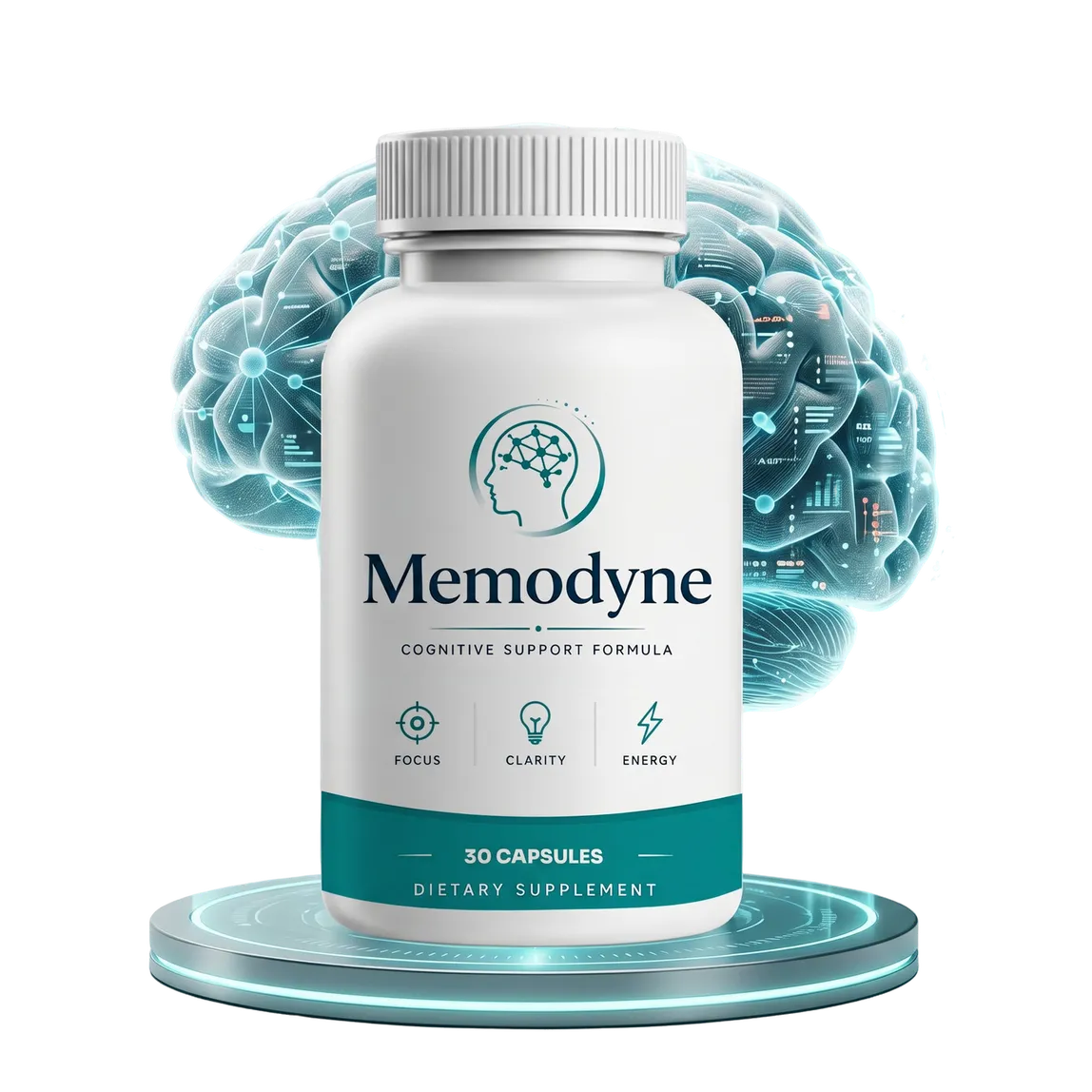
Blood vessels widen and relax using a small signalling molecule called nitric oxide, which the body makes from the amino acid L-arginine and tops up by recycling L-citrulline back into arginine. That is why circulation-focused formulas centre on these nutrients. A supplement such as Memodyne pairs L-arginine and L-arginine alpha-ketoglutarate with L-citrulline, alongside niacin for normal energy metabolism, beta-alanine for everyday stamina and a little calcium involved in nerve signalling — all in one daily capsule. It is support for a well-rested brain, not a substitute for the sleep itself. See the current Memodyne packages here.

Support a rested, focused mind
Memodyne puts six cognitive and circulatory actives into one easy daily capsule — backed by a 60-day guarantee.
See Memodyne PackagesWhen to talk to a professional
Most everyday sleep loss responds to steadier habits. But persistent trouble sleeping — loud snoring with pauses in breathing, waking unrefreshed no matter how long you spend in bed, or focus and memory problems that do not lift after several weeks of genuinely better sleep — can point to a condition such as sleep apnoea, an underactive thyroid or another issue that deserves medical input. If that sounds like you, talk to your doctor. Taking sleep seriously and knowing when to get checked are two halves of the same good habit.
Frequently asked questions
How much does one bad night of sleep affect memory?
A single short night mostly hits attention, reaction time and working memory the next day, so new information is harder to take in and hold. The good news is that most of this rebounds after one or two solid nights. The bigger problem is a run of short nights, which compounds and is harder to shake off.
Why can I not concentrate when I am tired?
Sleep loss reduces the prefrontal cortex's ability to filter distractions and hold a task in mind, and it slows the speed at which your brain processes information. The result is a mind that drifts, re-reads the same line and struggles to keep one thread going, which most people experience as poor focus or brain fog.
Does sleep really help you remember what you learned?
Yes. Overnight, the brain replays and stabilises the day's experiences, moving them from fragile short-term storage into more durable long-term memory. Deep slow-wave sleep is linked to remembering facts, while REM sleep supports skills and emotional processing. Skip sleep and much of what you learned that day is never properly filed.
How many hours of sleep do adults need for a sharp mind?
Most adults do best on seven to nine hours a night. Consistently getting less is linked in research to slower attention, weaker recall and lower mood. Quality matters as much as quantity, so unbroken sleep at a regular time beats a long but restless night.
Can a supplement replace good sleep for focus?
No. Nothing replaces sleep for memory and focus. A supplement like Memodyne is designed to support the healthy circulation and steady energy metabolism your brain relies on during waking hours, alongside good sleep, hydration and diet, not instead of them.
References
- National Institute of Neurological Disorders and Stroke (NIH) — Brain Basics: Understanding Sleep.
- Sleep Foundation — reviews on sleep, memory consolidation and daytime concentration.
- Harvard Health Publishing — guidance on sleep, memory and cognitive performance.
- Nature Reviews Neuroscience — research on sleep-dependent memory consolidation.
- American Physiological Society — research on cerebral blood flow and nitric oxide.
The Memodyne Research Team is a small group of writers and reviewers focused on everyday cognitive health — memory, focus, healthy circulation and the daily habits that support them. We read the primary research, translate it into plain language, and fact-check every guide before it is published. Our articles are general education, not a substitute for advice from your own doctor or pharmacist.
† These statements have not been evaluated by the FDA. This product is not intended to diagnose, treat, cure or prevent any disease. This article is for general information only and is not medical advice.