How Gut Health Affects Your Memory and Focus
| The link | The gut and brain talk constantly through the gut-brain axis, so digestive health shapes mood, clarity and focus. |
| Why | Gut microbes influence inflammation, produce useful compounds and help make chemicals the brain relies on. |
| What helps | Fibre-rich plants, fermented foods, less ultra-processed food and sugar, plus sleep, movement and hydration. |
Your “second brain” is closer than you think
We tend to picture thinking as something that happens only above the neck. Yet anyone who has felt butterflies before a big moment, or lost their appetite under stress, already knows the gut and the mind are wired together. Once you look at the science, understanding how gut health affects memory and focus becomes far less surprising — your digestive system is in constant conversation with your brain, and the state of your gut genuinely shapes how clearly you think.
Your gut is home to trillions of microbes — bacteria and other organisms collectively called the gut microbiome. Far from passive passengers, they help digest food, train your immune system, and manufacture a remarkable range of chemicals, some of which act as signals to the brain. The gut is even lined with its own vast network of nerve cells, which is why it is sometimes nicknamed the “second brain.” When that ecosystem is healthy and diverse, it tends to support a steadier, clearer mind. When it is out of balance, thinking can suffer.
The gut-brain axis, in plain language
Scientists call this two-way communication line the gut-brain axis. Information flows along several channels at once. There is a direct nerve connection — the vagus nerve — running like a cable between gut and brain. There is a hormonal channel, with gut signals influencing appetite, stress hormones and mood. There is an immune channel, because much of the body’s immune activity happens in the gut and inflammation there can send signals brain-ward. And there is a chemical channel: gut microbes produce short-chain fatty acids, vitamins and precursors to neurotransmitters. In fact, a large share of the body’s serotonin — a chemical involved in mood — is made in the gut. When these channels are carrying healthy signals, mood is steadier and the brain is better supported for focus and memory.

How an unhealthy gut can cloud your thinking
When the microbiome loses diversity — often from a diet heavy in ultra-processed food and sugar and light on fibre — the balance can tip toward less helpful microbes, and the gut lining can become irritated. Two things follow that matter for the brain. First, low-grade inflammation can rise and travel, and inflammation is increasingly linked to the cloudy, sluggish feeling of brain fog and to low mood. Second, an unbalanced gut produces a less favourable mix of chemical messengers, which can nudge mood and mental energy in the wrong direction. None of this is the whole story of brain fog — there are many contributors, which we lay out in what causes brain fog and how to clear it naturally — but gut health is a genuine and frequently overlooked piece of the puzzle.
There is a helpful overlap here. Much of what harms the gut also harms the brain directly. Excess sugar, for example, both feeds an unbalanced microbiome and sends your blood sugar on the swings we describe in how sugar affects your brain and memory. Improve your diet for your gut and you tend to improve it for your mind at the same time.
Everyday signs your gut may be affecting your focus
These clues are general rather than diagnostic, but they are worth noticing together:
- ✓ Recurrent bloating, irregularity or digestive discomfort alongside foggy days
- ✓ Mental clarity that seems to track with what you eat — sharper on whole-food days, cloudier after heavy processed meals
- ✓ Low, flat mood and mental fatigue that comes and goes with your digestion
- ✓ Strong cravings for sugar and refined carbs, which both reflect and reinforce an unbalanced gut
If digestive symptoms are persistent or severe, that is a conversation for your doctor. For the everyday version, the food-first habits below are where to start.
Foods and habits that feed a healthy gut — and a sharper mind
The wonderful thing about the gut microbiome is how responsive it is. Change what you eat and the community begins to shift within days.
Eat more fibre-rich plants. Fibre is the primary food for beneficial gut microbes. Load your plate with vegetables, fruit, whole grains, beans, lentils, nuts and seeds, and aim for variety — a wide range of plants feeds a wide range of microbes. Our roundup of the best foods for memory and concentration is, conveniently, a gut-friendly menu too.
Add fermented foods. Yoghurt with live cultures, kefir, sauerkraut, kimchi and other fermented foods deliver beneficial bacteria and are associated with greater microbial diversity. A small daily serving is an easy habit.
Cut back on ultra-processed food and added sugar. These starve the helpful microbes and feed the unhelpful ones. You do not need perfection — simply shifting the balance toward whole foods does most of the work.
Include healthy fats and oily fish. Olive oil, nuts and oily fish support the anti-inflammatory side of the picture, which benefits both gut lining and brain.
Mind sleep, stress and movement. The gut-brain axis runs both ways, so poor sleep and chronic stress disturb the gut just as gut trouble disturbs the mind. Managing stress, sleeping well and moving daily all support a healthier microbiome. Staying hydrated helps digestion move smoothly too.

Where Memodyne fits in a whole-body routine
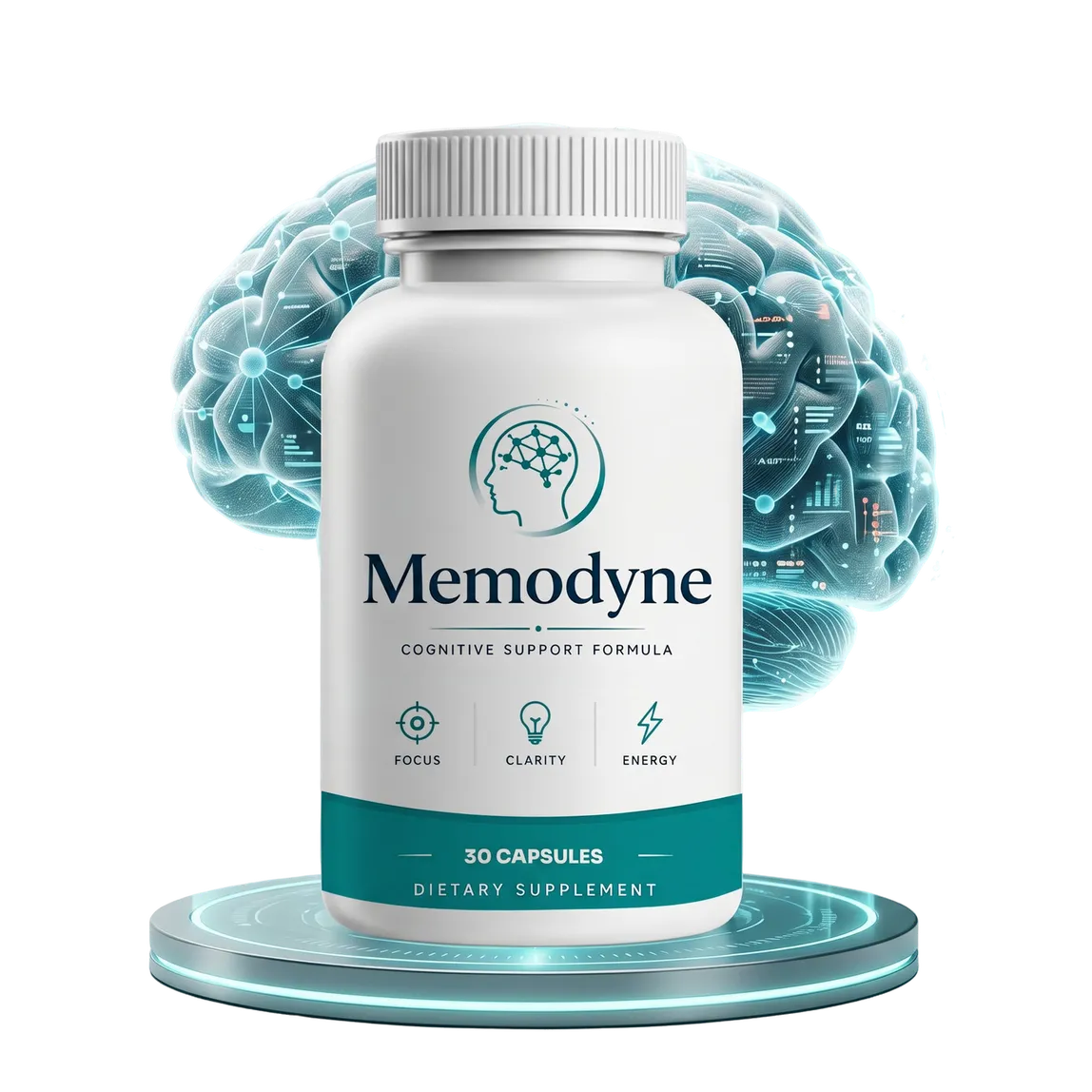
It is worth being straight about this: Memodyne is a cognitive support supplement built around healthy blood flow — it is not a probiotic or a digestive product, and it will not fix your gut. What it does is address a different piece of the same whole-body picture. Its once-daily capsule supplies L-arginine and L-arginine alpha-ketoglutarate with L-citrulline — amino acids the body uses to make nitric oxide, which helps blood vessels relax — alongside niacin for normal energy metabolism and beta-alanine for everyday stamina. A sharp mind is a system: a gut-friendly, fibre-rich diet, good sleep and movement do the foundational work, and a blood-flow-first supplement can sit alongside them as daily support. If that whole-system approach appeals, see the current Memodyne packages here.

Support a clear mind, from the ground up
Memodyne delivers six cognitive and circulatory actives in one easy daily capsule — backed by a 60-day guarantee.
See Memodyne PackagesFrequently asked questions
How does gut health affect memory and focus?
The gut and brain are in constant two-way communication through nerves, hormones, immune signals and the chemicals your gut microbes produce — the gut-brain axis. A balanced, diverse gut community supports steady mood, lower inflammation and the production of compounds the brain uses, all of which help focus and memory. An unhealthy, inflamed gut is linked to more brain fog and low mood.
Can an unhealthy gut cause brain fog?
It can contribute. When the gut lining is irritated and the microbial balance is off, low-grade inflammation and unhelpful microbial by-products can travel to the brain and are associated with the cloudy, unfocused feeling of brain fog. Gut health is only one of several possible causes of fog, but it is a plausible and often overlooked one.
What foods improve gut health and focus?
Feed your microbes with fibre-rich plants — vegetables, fruit, whole grains, beans, nuts and seeds — plus fermented foods like yoghurt, kefir, sauerkraut and kimchi for beneficial bacteria. Oily fish and olive oil support the anti-inflammatory picture. Cutting back on ultra-processed food and excess sugar helps the balance tip the right way.
How long does it take to improve gut health?
The gut community responds surprisingly quickly to diet — measurable shifts can begin within days of eating more fibre and fermented foods. Building a genuinely diverse, resilient microbiome and feeling the knock-on benefits for energy and clarity is more of a weeks-to-months project of consistent eating rather than a quick fix.
Does Memodyne support gut health?
Memodyne is a cognitive support supplement focused on healthy blood flow, not a digestive or probiotic product. It supplies amino-acid precursors to nitric oxide along with niacin and beta-alanine to support circulation and everyday energy. Think of it as one part of a whole-body routine that also includes a gut-friendly, fibre-rich diet.
References
- Harvard Health Publishing — articles on the gut-brain connection and the microbiome.
- National Institutes of Health (NIH) — research on the human microbiome and health.
- Johns Hopkins Medicine — consumer resources on the “second brain” and the enteric nervous system.
- American Gastroenterological Association — guidance on fibre, fermented foods and gut health.
- Cleveland Clinic — articles on gut health, inflammation and mood.
The Memodyne Research Team is a small group of writers and reviewers focused on everyday cognitive health — memory, focus, stress resilience, healthy circulation and the daily habits that support them. We read the primary research, translate it into plain language, and fact-check every guide before it is published. Our articles are general education and are not a substitute for professional medical advice.
† These statements have not been evaluated by the FDA. This product is not intended to diagnose, treat, cure or prevent any disease. This article is for general information only and is not medical advice.