Memodyne Official Website › What the label claims
What the label claimsMemodyne Benefits: the five claims on the label, read carefully
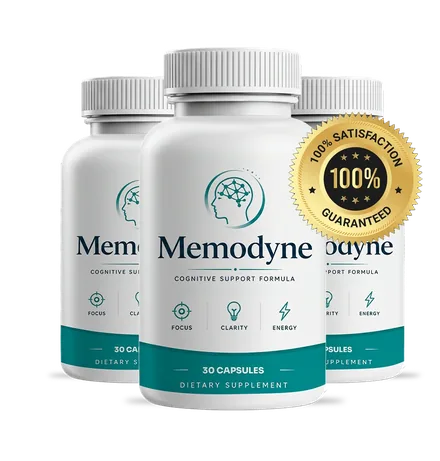
The supplier makes five statements about Memodyne: enhance memory function, protect against oxidative stress, boost neural communication, support long-term brain health, and optimize neurotransmitter production. Each is a structure and function claim, which is the permitted form for a supplement, and each is the ceiling rather than a finding.
This page prints all five as written, then says what each one is permitted to mean and what would have to be true for it to mean more.
The five Memodyne claims, printed as the supplier writes them
Five sentences, quoted rather than paraphrased.
| The claim, as written | What this kind of claim means | What it is not |
|---|---|---|
Enhance memory function and support overall cognitive health | A structure and function statement about a normal body process | Not a claim to treat memory loss, and not a measured outcome |
Protect the brain from oxidative stress and improve mental clarity | An antioxidant framing, common across the whole category | No oxidative stress marker has been measured for this product |
Boost neural communication and promote better brain performance | A statement about neural signalling in general terms | No trial of this product has measured signalling of any kind |
Support long-term brain health and improve focus and concentration | A long-horizon support statement | Nothing here has been followed for a long horizon |
Optimize neurotransmitter production and contribute to a sharper, more agile mind | A statement about neurotransmitter production | No neurotransmitter has been measured in a trial of this formula |
Quoted exactly. A supplement may make claims of this shape without pre-market approval, provided the seller holds substantiation and prints the FDA disclaimer, which is at the foot of every page here.
The FTC guidance for health products is the document that sets the standard behind claims like these in advertising. It asks for competent and reliable scientific evidence, and it is explicit that the evidence has to match the claim being made. A reader is entitled to ask which study supports which sentence, which is what the rest of this page does.
What Memodyne can support, in the ordinary sense of the word
Four honest answers, none of them a medical one.
A daily routine that is easy to keep
One capsule, one glass of water, before a meal. The distributor’s liked column on the reviews page puts a daily capsule first, none of its reviews mentions memory at all, and a supplement nobody remembers to take supports nothing.
The substrate for nitric oxide
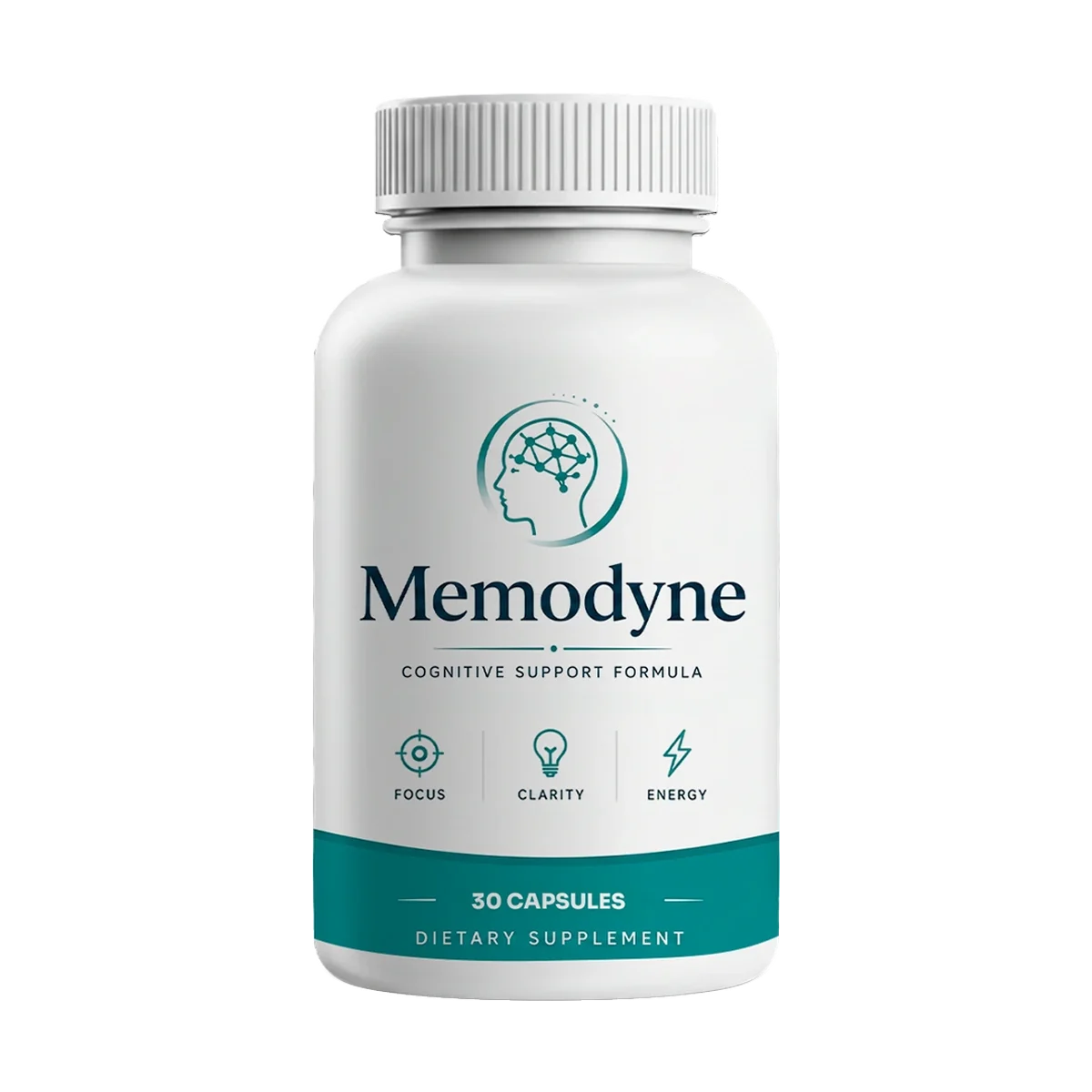
Citrulline raising plasma arginine is a measured, replicated effect at gram amounts. This panel prints citrulline twice, 200 mg between the two forms, which is a fifteenth to a thirtieth of the studied amounts. That is the honest size of this benefit.
A real share of one nutrient
Niacin, at 7.5 mg, is 47 per cent of its Daily Value, a real contribution for anybody whose diet runs short of it. Calcium, at 18 mg, is too little to matter. The niacin is the least oversold thing this product does.
A decision window
Sixty days from purchase is a commercial benefit rather than a biological one, and it is the only one on this page with a number attached that the supplier guarantees.
Which Memodyne ingredient each claim leans on
Five claims, seven ingredients, and an honest column on how strong each link is.
A claim is easier to weigh when you can see which name is carrying it. Mapping the five statements onto the seven ingredients takes about a minute and is worth doing before any of them is believed or dismissed.
| The claim | The name doing the work | How strong that link is |
|---|---|---|
Enhance memory function and support overall cognitive health | Niacin, by way of its deficiency state | Weak. The Chicago cohort followed dietary intake, not a supplement, and observational nutrition findings of that shape rarely survive a trial |
Protect the brain from oxidative stress and improve mental clarity | Beta-alanine, by way of carnosine, which the seller’s page calls a shield for neurons | Weakest of the five. The one trial that looked for carnosine in the brain used 6.4 g a day and found no change; the panel prints 40 mg |
Boost neural communication and promote better brain performance | Citrulline and arginine, by way of blood flow | Moderate as a mechanism, untested as an outcome for this product |
Support long-term brain health and improve focus and concentration | Citrulline and arginine again, and vascular risk generally | Indirect. Blood pressure is a real lever on long-term cognition, and the measured effect of these amino acids on it is a few millimetres of mercury |
Optimize neurotransmitter production and contribute to a sharper mind | Niacin, as a precursor in energy metabolism | Weak at ordinary intakes. Nicotinamide chemistry is real; a claim about optimisation needs a measurement nobody has published for this formula |
Written by this desk, not by the supplier. It is an opinion about strength of evidence, formed from the papers cited at the foot of this page.
The pattern is worth stating plainly: the two claims with the most substance behind them are the vascular ones, and their supporting research was done at gram amounts that the panel’s 400 mg of arginine and 200 mg of citrulline do not come near. That is the central tension in the product, and the panel lets any reader see it.
What a Memodyne buyer can check without taking anybody's word
Seven things a reader can confirm in a few minutes, and nothing that requires trusting this page.
- The Supplement Facts panel. Seven rows, each with an amount, on the side of the bottle: hold it against the table on the ingredients page.
- The directions line. It is printed on the bottle you receive, and it outranks every page on this website if the two ever differ.
- The capsule count. Thirty is printed on the front of the label, so a bottle that runs out in three weeks means the routine slipped rather than the count.
- The niacin upper limit. The NIH publishes it at 35 mg a day for adults, and it takes about twenty seconds to confirm on the ODS fact sheet.
- The calcium reference intakes, on the ODS calcium page, which is the table to hold beside any calcium supplement you already take.
- The lot number on the base of the bottle, against the one this desk prints. The batch page explains what a lot is and what it is not.
- The window. Sixty days from purchase, and the order email is the document that dates it.
Everything on that list is verifiable by the person holding the bottle, and for a supplement it is an unusually complete list: the panel means the one thing most labels in this category keep back is in plain sight.
What Memodyne is not, stated once and clearly
A dietary supplement, not a drug, and not a treatment for any form of memory loss.
Memodyne is a dietary supplement. It is not a drug, it is not FDA-approved, and it is not intended to diagnose, treat, cure or prevent any disease. It treats nothing: not memory loss, not mild cognitive impairment, and not any form of dementia. Nothing on this website says otherwise, and any page that seemed to would be a defect worth writing to this desk about.
The Alzheimer’s Association keeps a plain page on alternative treatments and what the evidence for them looks like, and the National Institute on Aging publishes a short guide to the difference between ordinary forgetfulness and a change worth having looked at. Both are better first reading than any product page, this one included, for somebody who is worried rather than curious.
For the practical questions, the FAQ covers what happens if a day is missed and what the window covers, and safety and interactions covers the medicines that matter here.
Order Memodyne with the claims in plain sight
Five structure and function statements, seven ingredients with printed amounts, and 60 days from purchase to decide. That is the whole offer, stated without decoration.
Two, three and six-bottle packs · 60-day money-back window
Order Memodyne From This DeskBatch MEM-26/ME-4386 · a single capsule each morning · dispatched inside the United States
Three more Memodyne pages worth opening
Sources for the Memodyne claims page
The regulator guidance and the two consumer references cited above.
- Health Products Compliance Guidance. U.S. Federal Trade Commission, December 2022. https://www.ftc.gov/business-guidance/resources/health-products-compliance-guidance
- Alternative Treatments. Alzheimer's Association. https://www.alz.org/alzheimers-dementia/treatments/alternative-treatments
- Memory, Forgetfulness, and Aging: What's Normal and What's Not? National Institute on Aging, National Institutes of Health. https://www.nia.nih.gov/health/memory-loss-and-forgetfulness/memory-forgetfulness-and-aging-whats-normal-and-whats-not
- Hersant H, He S, Maliha P, Grossberg G. Over the Counter Supplements for Memory: A Review of Available Evidence. CNS Drugs. 2023;37(9):797-817. PMID 37603263. https://pubmed.ncbi.nlm.nih.gov/37603263/
- Morris MC, Evans DA, Bienias JL, et al. Dietary niacin and the risk of incident Alzheimer's disease and of cognitive decline. J Neurol Neurosurg Psychiatry. 2004;75(8):1093-9. PMID 15258207. https://pubmed.ncbi.nlm.nih.gov/15258207/
- Niacin: Fact Sheet for Health Professionals. Office of Dietary Supplements, National Institutes of Health. https://ods.od.nih.gov/factsheets/Niacin-HealthProfessional/
- Calcium: Fact Sheet for Health Professionals. Office of Dietary Supplements, National Institutes of Health. https://ods.od.nih.gov/factsheets/Calcium-HealthProfessional/
- Shiraseb F, Asbaghi O, Bagheri R, Wong A, Figueroa A, Mirzaei K. Effect of l-Arginine Supplementation on Blood Pressure in Adults: A Systematic Review and Dose-Response Meta-analysis of Randomized Clinical Trials. Adv Nutr. 2022;13(4):1226-1242. PMID 34967840. https://pubmed.ncbi.nlm.nih.gov/34967840/
- Luo P, Chen J, Liu K, Zhang J. Does l-citrulline supplementation and watermelon intake reduce blood pressure in middle-aged and older adults? A systematic review and meta-analysis of randomized controlled trials. Clin Nutr ESPEN. 2025;69:653-664. PMID 40789388. https://pubmed.ncbi.nlm.nih.gov/40789388/
- Solis MY, Cooper S, Hobson RM, et al. Effects of beta-alanine supplementation on brain homocarnosine/carnosine signal and cognitive function: an exploratory study. PLoS One. 2015;10(4):e0123857. PMID 25875297. https://pubmed.ncbi.nlm.nih.gov/25875297/