Memodyne Official Website › Articles › Ingredients
IngredientsCitrulline and arginine: what the trials actually used
Four of the seven rows on this panel are arginine and citrulline in two forms each, 400 mg and 200 mg between them. Their published trials used 1.5 g to 12 g a day of a single ingredient and measured blood pressure, blood flow and exercise capacity. This article sets out what was used, what was found, and the one cognitive result in the family.
The problem arginine has
Arginine is the amino acid your body uses to make nitric oxide, the gas that relaxes the muscle in artery walls. That much is textbook. The complication is that swallowed arginine is largely destroyed by arginase in the gut wall before it reaches the bloodstream, which is why the amounts in the arginine literature are measured in grams rather than milligrams.
Citrulline is the workaround, and it is a good one. It is absorbed intact, bypasses that first-pass destruction, and is converted to arginine in the kidney. A product that names both is naming the problem and the workaround on the same label.
Memodyne is a dietary supplement. This article describes a label and a literature; it is not advice about anybody's health. If your recall has slipped far enough that family or colleagues have raised it with you, the useful next step is an appointment, not a bottle: the National Institute on Aging explains which changes are ordinary and which are not.
The crossover study that settled the pharmacokinetics
Schwedhelm and colleagues published the study everybody in this corner of the literature cites. Twenty healthy volunteers took six different regimes of placebo, citrulline and arginine, each for a week, in a double-blind randomised crossover. Plasma arginine, the arginine to ADMA ratio, urinary nitrate and flow-mediated dilation were all measured.
Citrulline raised plasma arginine dose-dependently, and more effectively than arginine itself did. On the top arm, 3 g twice a day, the arginine to ADMA ratio rose from 186 to 278 and urinary nitrate climbed with it. Flow-mediated dilation, the functional measure, did not improve over baseline in any arm, though pooled analysis found a correlation between the ratio and the dilation.
Two things to take from that. The mechanism is real and measurable. And the amounts that produced it were 3 g twice a day of one ingredient, for a week.
What happens at the outcome end
Markers are interesting; outcomes are what a buyer cares about. For this ingredient family the measured outcome is blood pressure, and there are now enough trials for meta-analysis.
| The analysis | What it pooled | What it found |
|---|---|---|
22 randomised trials, 30 effect sizes | 6.40 mmHg systolic and 2.64 mmHg diastolic; the effective amount was 4 g a day or more | |
5 trials using 24-hour ambulatory monitoring, 202 adults | 4.23 mmHg on 24-hour systolic pressure, on the harder measurement standard | |
15 trials in middle-aged and older adults, 415 people | 4.02 mmHg systolic and 2.54 mmHg diastolic | |
43 trained adults, crossover, 5.3 g of citrulline | No improvement in strength, endurance or perceived exertion, with or without malate |
Four analyses, three of them positive on blood pressure and one of them negative on performance. None of the four measured memory.
A four to six millimetre fall in systolic pressure is a real effect. It is also a modest one, it took grams a day to produce, and nobody in these trials was asked whether their memory had improved.
The one cognitive result in this ingredient family
There is exactly one trial worth mentioning, and it is worth mentioning precisely because it is so small. Chen and colleagues put twelve well-trained taekwondo athletes through three simulated matches, twice, in a double-blind randomised crossover. After the second match they took either placebo or a mixture of branched-chain amino acids at 0.17 g per kilogram with arginine and citrulline at 0.05 g per kilogram each, which is about 3.5 g of each amino acid for a 70 kg adult.
Reaction times on a sport-specific test held up in the supplemented trial and deteriorated on placebo, alongside a lower free tryptophan to BCAA ratio and higher nitrate. The authors described it as alleviating exercise-induced central fatigue.
That is a study of twelve young male athletes recovering from high-intensity exercise, using a mixture in which the branched-chain amino acids are doing most of the work. It is not evidence that a capsule improves memory in a 55-year-old at a desk, and anyone citing it as though it were has not read it.
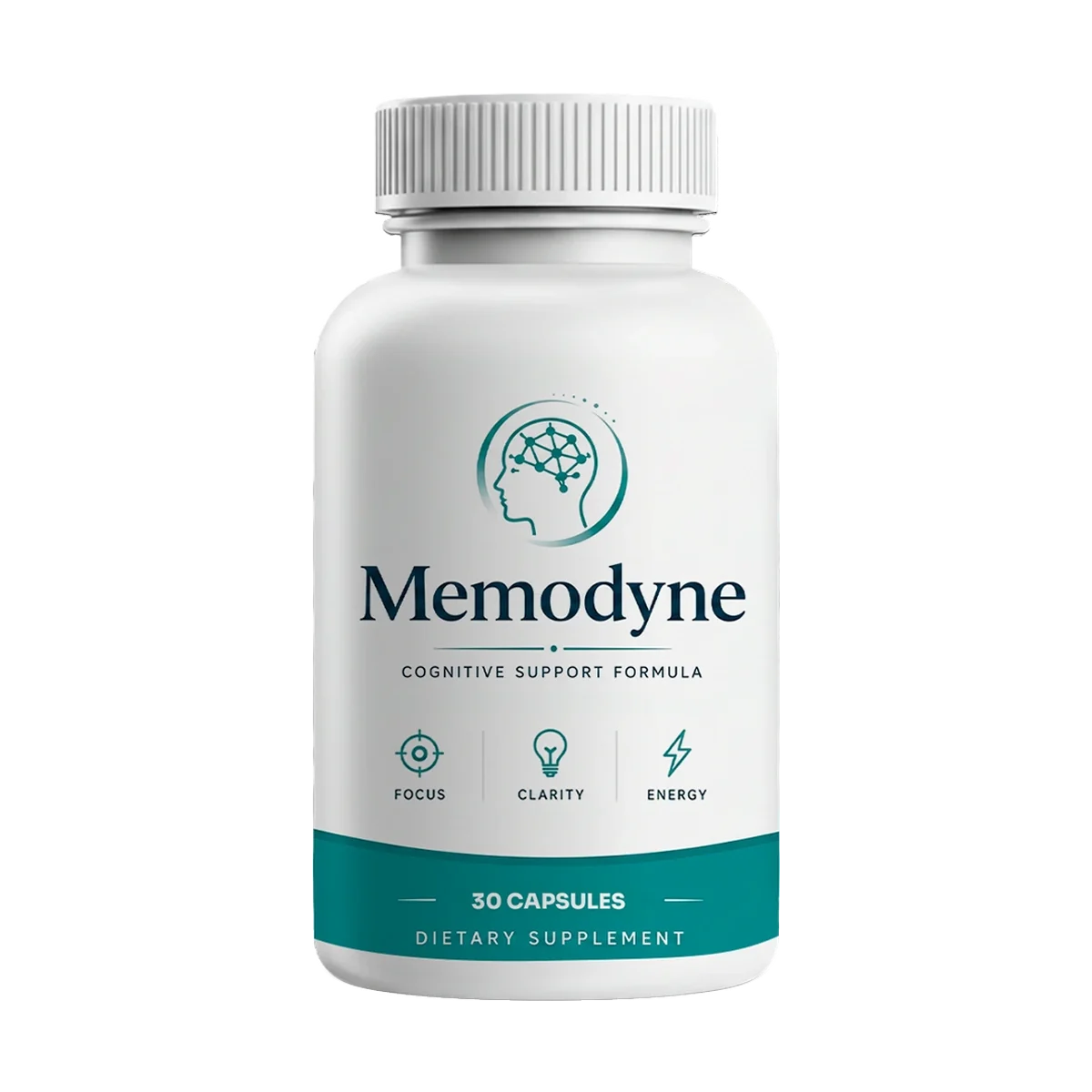
Memodyne carries both amino acids, in two forms each
Four of the seven rows on this panel are arginine and citrulline: 400 mg and 200 mg between them, in one capsule a day. The window is 60 days from purchase.
Two, three and six-bottle packs · 60-day money-back window
Order Memodyne From This DeskBatch MEM-26/ME-4386 · a single capsule each morning · dispatched inside the United States
Why each amino acid appears twice
A reader counting names on this label will notice that arginine and citrulline each appear in two forms. That is a formulation decision rather than an accident, and the reasoning behind each pair is worth knowing because it is the kind of thing a label never explains.
Arginine appears free and as arginine alpha-ketoglutarate. AAKG binds two arginine molecules to one of alpha-ketoglutarate, a Krebs-cycle intermediate, on the argument that the pair is used more efficiently than arginine alone. The 2:1 on the label is that ratio. Whether the argument holds is a separate question; the trial that tested it at a serious amount used 12 g a day.
Citrulline appears as the hydrochloride and as the malate. The hydrochloride is a salt used to stabilise the powder and is not a second active ingredient. The malate binds citrulline to malic acid, which is itself a Krebs-cycle intermediate, and it is the form the sports-nutrition industry standardised on decades ago.
The best test of whether the malate earns its place is the one trial that compared the two head to head. That crossover in 43 trained adults gave 5.3 g of citrulline, then the same 5.3 g with 2.7 g of malate attached, 45 minutes before three lifting sessions. Neither beat placebo on maximal strength, ballistic strength, strength-endurance or perceived exertion, and the malate added nothing to the citrulline.
So a label naming four entries is naming two molecules in four dresses. That is not dishonest, and it is worth understanding before comparing an ingredient count against another product.
What to ask a seller about these four names
If you are looking at any product built on this ingredient family, four questions separate a formula somebody thought about from a list somebody assembled.
- How much citrulline is in a serving, in milligrams? The pharmacokinetic work used 1.5 g to 3 g twice a day, so the answer tells you immediately whether the product is in the neighbourhood.
- Is the arginine there for a reason, given that it is largely destroyed in the gut? A seller who can answer that has read the literature.
- What is the total weight of the capsule contents? Seven ingredients share one capsule, and the total is the ceiling on all of them together.
- Is there a trial of the finished product? Almost always the answer is no, and a seller who says yes should be asked for the citation.
For this particular label the panel answers the first three: 200 mg of citrulline across two forms, 400 mg of arginine across two, and seven rows that add up to about two thirds of a gram. The answer to the fourth is no. That is stated on every page of this website rather than buried, and the choosing guide applies the same four questions to anything else on the shelf.
The question this leaves for a capsule
Put the literature and the label side by side and one question remains, which is the only one that matters for a buyer.
- The pharmacokinetic result came from 1.5 g to 3 g of citrulline twice a day. The panel prints 200 mg across both citrulline forms.
- The blood-pressure curve for arginine turns at about 4 g a day. The panel prints 400 mg across both arginine forms.
- The effect, if present at these amounts, would be smaller than a few millimetres of mercury, and nothing a reader would feel.
- And the cognitive claim would still be an extrapolation from vascular physiology, because no trial of this formula exists.
One more thing is worth saying about amounts in a shared capsule, because it is the arithmetic the panel lets anybody do out loud. The seven rows add up to 665.5 mg, and the four arginine and citrulline entries are 600 mg of that. The rest of the capsule is beta-alanine, niacin, calcium, and the other ingredients the panel names: a hypromellose shell, vegetable stearate and silicon dioxide. A single capsule simply does not have room for gram amounts of anything.
That is not a criticism of the panel, which is honest. It is the reason the comparison with the trials comes out the way it does.
None of that makes the ingredient choice foolish. Citrulline is the better of the two routes into nitric oxide and choosing it over arginine alone shows somebody read the literature. It makes the amount the whole question, and the panel answers it: 200 mg of citrulline. The ingredients page sets out each name in turn and the mechanism page follows the pathway step by step.
- Schwedhelm E, Maas R, Freese R, et al. Pharmacokinetic and pharmacodynamic properties of oral L-citrulline and L-arginine: impact on nitric oxide metabolism. Br J Clin Pharmacol. 2008;65(1):51-9. PMID 17662090. https://pubmed.ncbi.nlm.nih.gov/17662090/
- Shiraseb F, Asbaghi O, Bagheri R, Wong A, Figueroa A, Mirzaei K. Effect of l-Arginine Supplementation on Blood Pressure in Adults: A Systematic Review and Dose-Response Meta-analysis of Randomized Clinical Trials. Adv Nutr. 2022;13(4):1226-1242. PMID 34967840. https://pubmed.ncbi.nlm.nih.gov/34967840/
- Shi Y, Liu Y, Zhou Z, Xu S, Luo P. Reassessment of the effect of oral l-arginine on blood pressure: A systematic review and meta-analysis based on ambulatory blood pressure monitoring. Nitric Oxide. 2026;164:60-68. PMID 42520885. https://pubmed.ncbi.nlm.nih.gov/42520885/
- Luo P, Chen J, Liu K, Zhang J. Does l-citrulline supplementation and watermelon intake reduce blood pressure in middle-aged and older adults? A systematic review and meta-analysis of randomized controlled trials. Clin Nutr ESPEN. 2025;69:653-664. PMID 40789388. https://pubmed.ncbi.nlm.nih.gov/40789388/
- Martín-Olmedo JJ, Miras-Moreno S, Cuadra-Montes K, García-Ramos A, Ruiz JR, Jurado-Fasoli L. Malate or Not? Acute Effects of L-Citrulline Versus Citrulline Malate on Neuromuscular Performance in Young, Trained Adults: A Randomized, Double-Blind, Placebo-Controlled Crossover Trial. Int J Sport Nutr Exerc Metab. 2025;35(2):89-98. PMID 39662304. https://pubmed.ncbi.nlm.nih.gov/39662304/
- Chen IF, Wu HJ, Chen CY, Chou KM, Chang CK. Branched-chain amino acids, arginine, citrulline alleviate central fatigue after 3 simulated matches in taekwondo athletes: a randomized controlled trial. J Int Soc Sports Nutr. 2016;13:28. PMID 27418883. https://pubmed.ncbi.nlm.nih.gov/27418883/